Commercial Laundry Guides
How to Choose a Commercial Laundry Service in Southampton
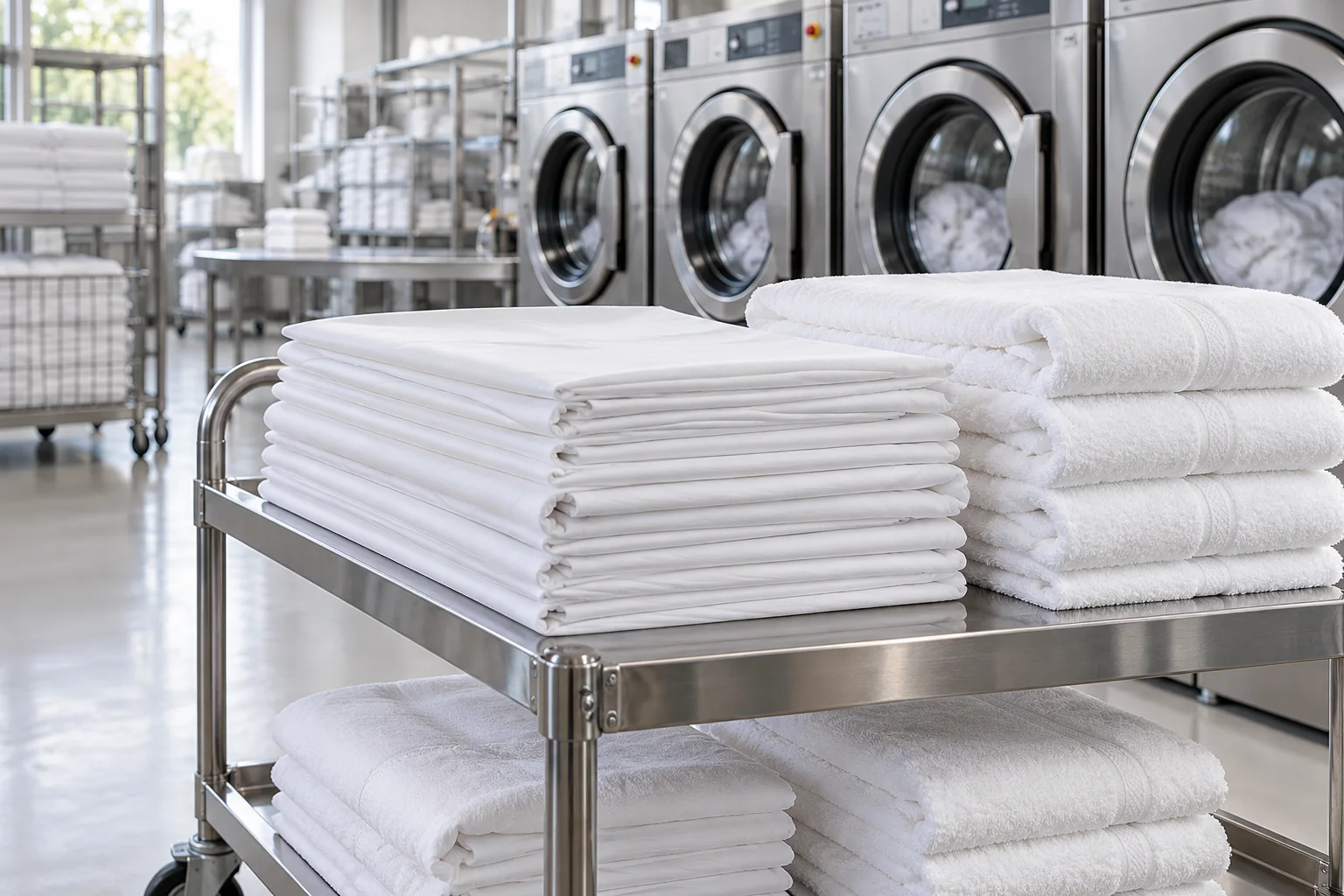
The right commercial laundry service should fit the way your business operates. Clean linen matters, but so do collection times, consistent finishing and knowing that your next delivery will cover the work ahead.
For a hotel, restaurant, salon or serviced apartment in Southampton, comparing providers starts with your own requirements. Use this guide to put together a useful brief, ask specific questions and compare quotations on the same basis.
Start with the items and volumes you actually use
“We need laundry twice a week” leaves several questions unanswered. Two bags of towels are a different job from two bags containing embroidered uniforms and tablecloths. List your items by type, size and finish before asking for a quote.
- Accommodation: sheet and duvet-cover sizes, pillowcases, bath towels, hand towels and bath mats.
- Restaurants and venues: tablecloth dimensions, napkin quantities, chef jackets and aprons.
- Salons, gyms and other businesses: towel types, workwear and any items with special care instructions.
Record the normal weekly quantity and the busiest week you need to support. Note any seasonal changes or event bookings. If your figures are estimates, say so: a realistic starting estimate is more useful than an apparently precise number that does not reflect your operation.
Seven questions to ask a commercial laundry provider
1. Can the collection and return schedule work around our business?
Give your postcode, access restrictions, collection point and the time clean items must be available. Ask for the proposed collection days and return arrangements, including what happens around bank holidays. A fast advertised turnaround is only useful if it meets your actual changeover or service deadline.
2. What washing and finishing is included?
Ask how your specific items will be returned: folded, pressed, hung or packed by item type. Explain what a service-ready tablecloth or uniform looks like to your team. Establish which treatments are included and which need assessment or a separate charge.
3. How are items counted and identified?
Find out what records accompany each collection and how returned quantities can be reconciled. Agree how sizes, customer-owned stock and unusual items are identified. A clear count gives both parties a practical way to investigate a discrepancy.
4. What happens if an item needs more attention?
Ask how stains, damage and rejected items are reported. Clarify the process for raising a query after delivery and the period in which you should do so. Do not assume that every mark can be removed or that damaged fabric can be restored.
5. Can the service accommodate changes in volume?
Discuss busy weekends, larger events and quieter periods. Ask how much notice is needed and what capacity can be confirmed. Keep a reserve of your critical linen items rather than relying on an unconfirmed emergency collection.
6. Who handles collection or quality queries?
Know which contact details to use, when the team is available and what information helps them investigate. An item count, collection date and clear photograph of an issue are more useful than a general message saying that a delivery was wrong.
7. Which terms apply to our arrangement?
Read the proposed pricing, payment, cancellation and loss-or-damage terms. Ask about anything unclear before agreeing the service. This is also the point to confirm whether the quote covers laundering your own stock or a different arrangement such as linen hire.
Compare the full service cost, not a single headline price
Ask every provider to price the same example week. A quotation is easier to compare when the item mix, quantities, finishing and collection schedule are consistent.
| Cost or condition | What to confirm |
|---|---|
| Charging basis | Per item, weight or another agreed basis; how sizes affect the price. |
| Collection and delivery | Whether transport is included and whether a minimum charge applies. |
| Finishing and treatment | What is included for pressing, packing and items requiring additional attention. |
| Tax and invoicing | Whether quoted figures include VAT and when invoices are due. |
| Schedule changes | Notice periods and any charges for agreed changes or missed collections. |
If you currently wash in-house, also record staff handling time, machine capacity, maintenance, utilities and the space used. Outsourcing should be assessed against that whole workflow; a lower cost cannot be assumed without comparing your own figures.
Use the first collection to check the working arrangement
Where a trial is available, use a representative mix of your everyday items. Record what leaves, review the returned finish and check whether staff can put the delivery into use without extra sorting. Raise any adjustments early, then agree the routine.
A short handover sheet can cover the collection point, named business contact, item count and agreed return date. Keep the same record for subsequent collections so that performance can be reviewed consistently.
Commercial laundry support in Southampton
Mothers Laundry provides commercial laundry and collection and delivery for local businesses. With over 18 years of experience, we support customers with bedding, towels, table linen and workwear. Tell us your items, approximate volume and postcode so we can discuss an appropriate arrangement.
Frequently asked questions
How often should a business book laundry collections?
Base the schedule on how quickly items are used, the agreed return time and the clean stock you can hold. A busy property may need a different pattern from a small venue. Confirm availability rather than assuming a daily service.
What should I send when requesting a quote?
Include your postcode, business type, item list, normal and peak quantities, preferred collection days and required finish. Mention access restrictions and any special care labels.
How much spare linen should we keep?
Keep enough to cover use while items are away, plus a reserve appropriate to your business. Our hotel and Airbnb linen stock guide explains a practical way to calculate this.