Restaurant Laundry
Restaurant Linen and Chef Wear: A Practical Laundry Care Guide
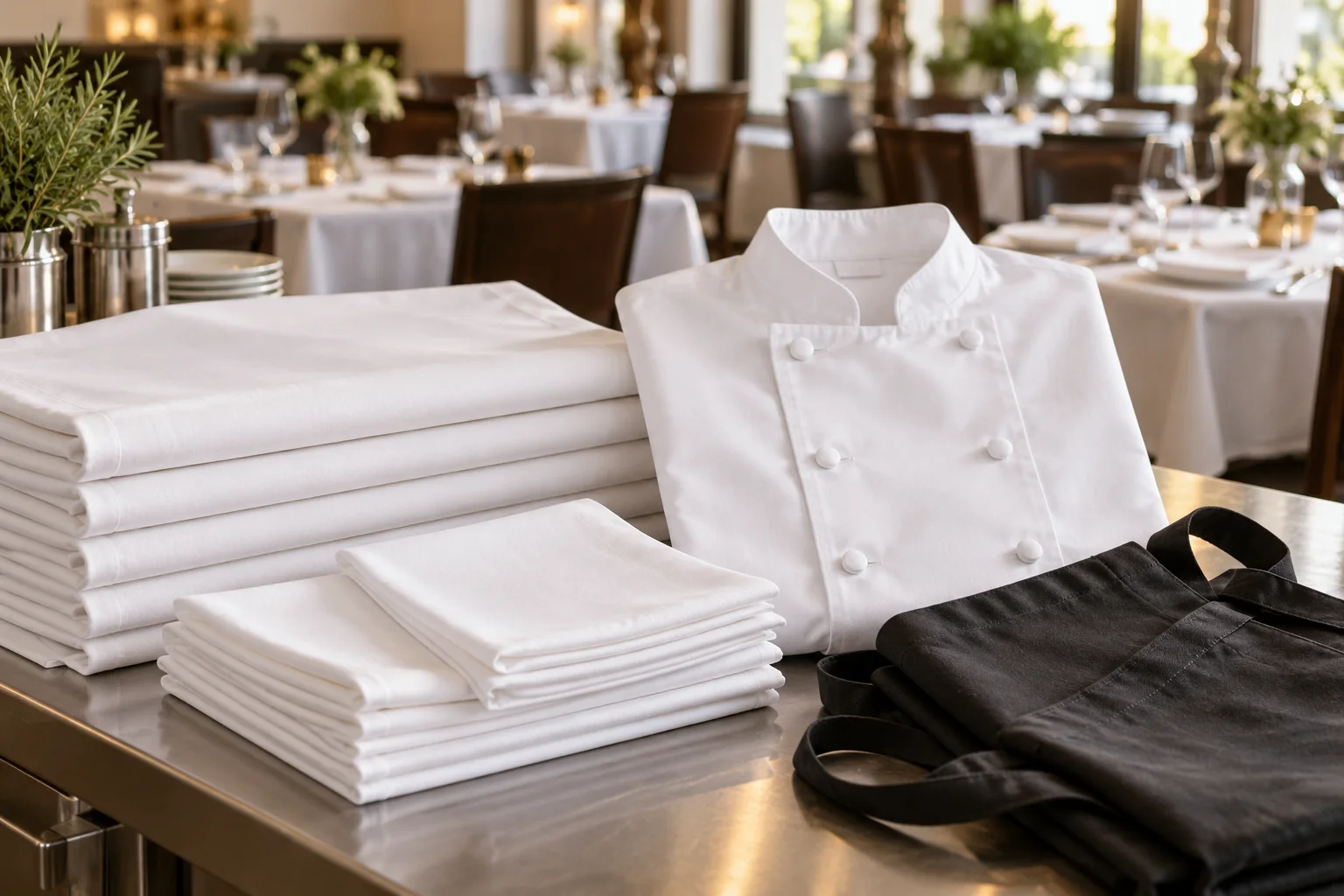
Table linen and chef wear have different jobs, but both need a consistent laundry routine. A tablecloth must look right in the dining room; a chef jacket needs to return in the right size, with the finish and condition your team expects.
This guide covers the practical handover between your restaurant and its laundry provider: identifying items, following care instructions, reporting marks and checking returned stock. It applies to everyday commercial textiles; specialist protective clothing needs its own manufacturer-led care arrangements.
Separate table linen from kitchen workwear
Create clear collection groups for tablecloths, napkins, chef jackets and aprons, following your provider’s packing instructions. Keep colours and sizes identifiable. This makes the collection record more useful and helps avoid a mixed bag becoming a sorting problem later.
Decide who checks the items before they leave. Remove cutlery and other loose objects, empty garment pockets and flag damaged buttons or fastenings. Do not put cleaning cloths into a bag of dining linen without first agreeing how they should be handled.
Use a consistent identification method for customer-owned stock. If your team needs named or individually sized uniforms returned together, discuss that requirement in advance rather than assuming it is part of a standard bulk service.
Let the care label guide the process
Two white items can need different treatment. Fabric blends, finishes, embroidery and trims can change what washing, drying and ironing an item will tolerate. Keep supplier care information for new stock and make it available to your laundry provider.
GINETEX’s care-symbol guidance explains that the triangle relates to bleaching, the square to drying and the iron symbol to ironing conditions. A crossed-out treatment should not be used. Do not assume that white fabric permits chlorine bleach or that every chef jacket can take the same ironing conditions.
If a label is missing or unclear, ask the supplier or laundry provider before deciding on treatment. Avoid prescribing one wash temperature for all restaurant linen: the appropriate process depends on the textile and its intended use.
Report stains clearly rather than guessing a treatment
When a mark needs attention, identify the item and describe what is known about it. “Red wine on one white tablecloth after Saturday service” is more useful than “stained linen”. Mention any treatment already attempted so the laundry has the full picture.
Agree how these items should be packed and identified. Do not add unlabelled chemicals or use improvised treatment combinations. A commercial provider can assess an item, but no responsible process can guarantee that every stain will disappear without affecting the fabric.
| Item | Details to record | Return requirement |
|---|---|---|
| Tablecloths | Quantity, dimensions, colour and specific marked items. | Agreed pressing and folding suitable for your table setup. |
| Napkins | Quantity, fabric or range where relevant, and any items needing review. | Consistent finish and packing for service preparation. |
| Chef jackets | Sizes, identifying marks, damaged fastenings and known stains. | Agreed folded or hanging presentation. |
| Aprons | Type, colour, quantity and condition of straps or ties. | Clean, sorted items ready for allocation to staff. |
Make collection part of the closing routine
Choose a designated collection point and make sure the team knows which bags are ready to go. Keep the item count with the collection record. Confirm the arrangements for access, particularly where deliveries use a shared service entrance or restricted loading area.
Before a large booking, check what will be needed for the following service as well as the event itself. A full set of tablecloths may be tied up in the laundry cycle while the restaurant continues trading. Build that overlap into the stock plan.
A concise closing checklist can make the routine repeatable:
- Sort the agreed item groups and check for loose objects.
- Count items by type and size.
- Identify stains, damage or special instructions.
- Pack according to the agreed collection process.
- Record the collection date and expected clean return.
- Check that enough clean stock remains for the next service.
Check the finish before items go back into use
Check the delivery against the collection record and put each item type in its allocated place. Review the returned finish under the lighting in which the linen will be used. Record any issue promptly with the item details and delivery date.
Keep clean stock in a designated, clean storage area separate from used items. Avoid compressing freshly finished table linen into an overfilled cupboard. Store uniforms so staff can identify sizes without repeatedly disturbing the whole delivery.
Keep a small review area for items that are not ready for service. A tablecloth awaiting assessment should not be counted as part of the stock available for tonight’s tables.
Buy replacements with the laundry cycle in mind
Before changing fabric ranges or ordering embroidered uniforms, check care instructions, available sizes and replacement lead times. Consider trialling a sample through the intended process before a larger order. Compare the appearance after laundering with the standard your business wants to maintain.
Keep a record of replacements and withdrawals. Repeated problems with one item type may point to a purchasing, handling or storage issue that deserves attention, rather than a need to reorder the same stock indefinitely.
Frequently asked questions
Can table linen and chef wear go in the same collection?
They may be collected on the same visit, but agree the sorting and packing requirements with your provider. Keep item types identifiable and disclose anything requiring special handling.
Should all white restaurant linen be bleached?
No. Check the care label and the agreed professional process. White colour alone does not establish whether bleaching is appropriate.
How do we avoid running out before a busy service?
Plan quantities around covers, table changes, staff requirements and the confirmed return date. Hold an appropriate reserve and discuss increased volumes before a large event.
See our commercial laundry service for table linen and workwear, or use the provider comparison checklist when reviewing your arrangements.